PCB TOOLS / Electronics reference
Arduino Legacy-Board Comparison: UNO, Due, Mega, Nano and MKR1000
Compare the ten historical Arduino boards named by the source: processor, logic voltage and interfaces. UNO R3 reuses the existing pinout; other figures are original functional summaries, not copied photos or maps of newer namesake boards.
Quick answer
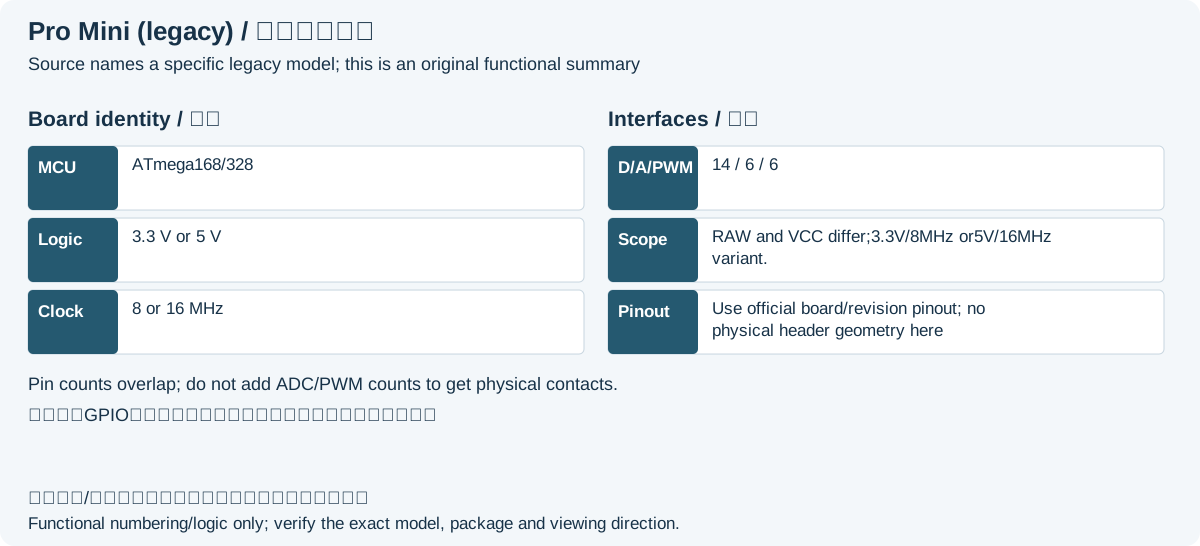
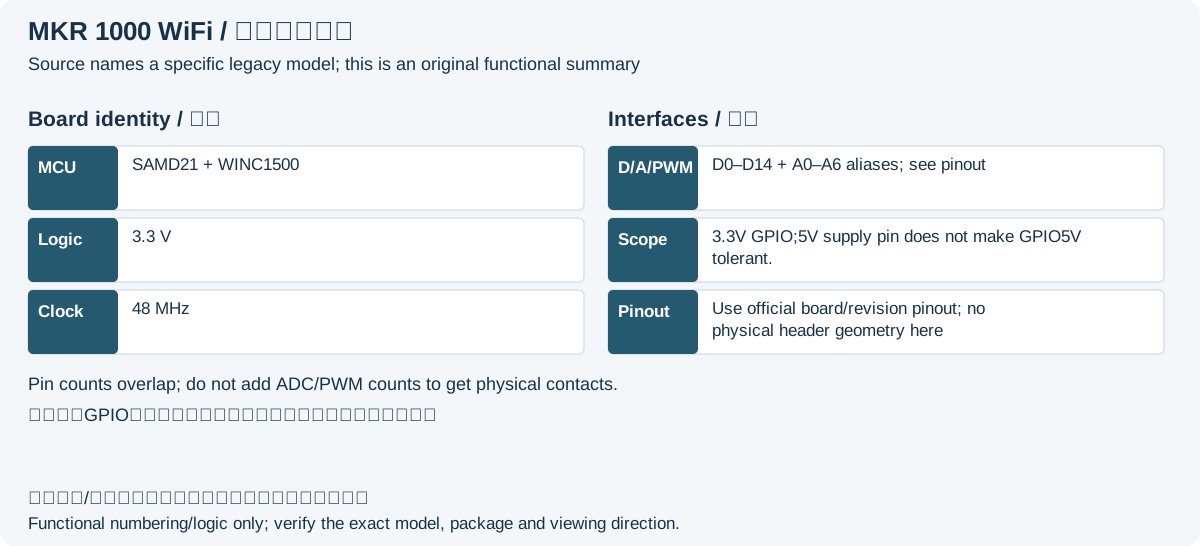
UNO R3, Classic Nano and Mega2560 are normally5 V AVR boards; Due and MKR1000 use3.3 V logic. Micro/Leonardo use ATmega32U4 native USB. Pro/Pro Mini have3.3 V/8 MHz and5 V/16 MHz variants. Supply-input voltage is not the GPIO voltage limit.
Scope
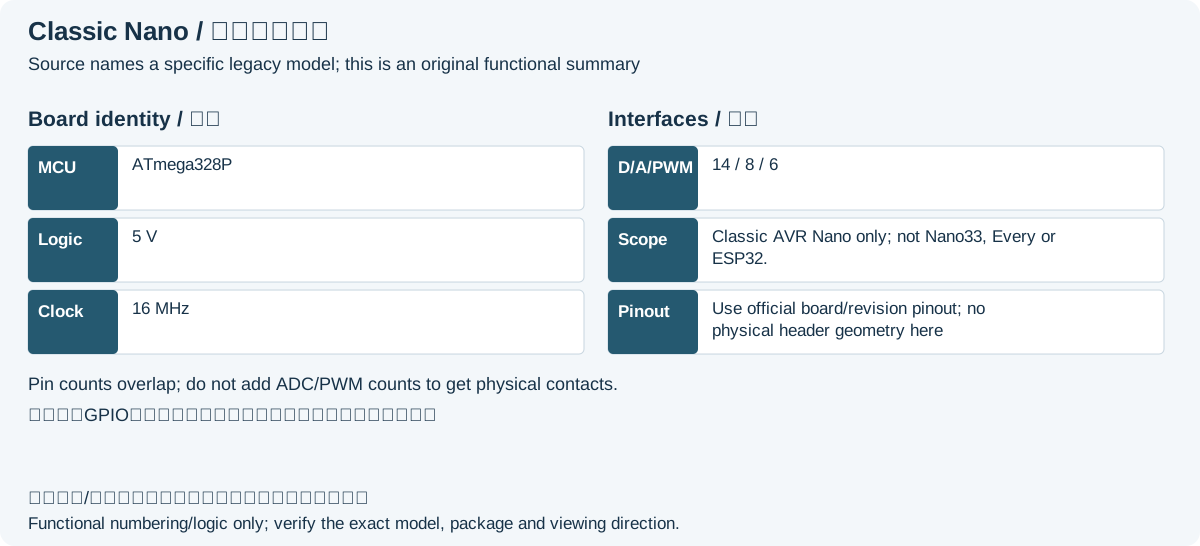
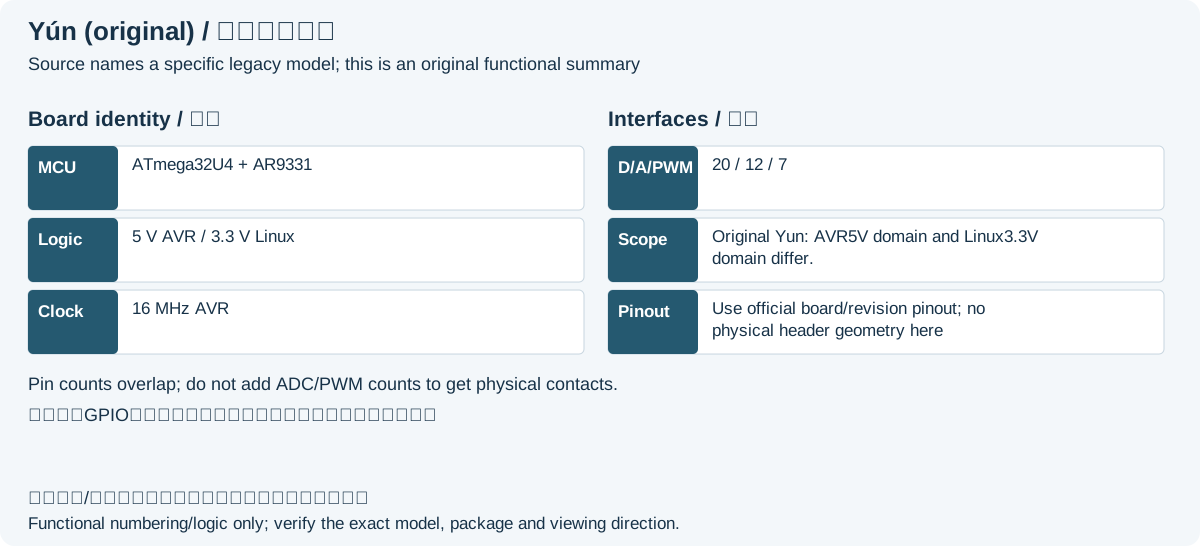
Nano means Classic AVR Nano, not Nano33/Every/ESP32; UNO means R3, not R4. Yún means the original ATmega32U4+AR9331 design. Digital/ADC/PWM counts overlap and are not additive physical-pad counts; use the official MKR pin aliases. This is a model comparison; wire by the exact board revision.
Reading example
Due provides DAC0/DAC1 for two true analog outputs. UNO R3 analogWrite normally produces PWM, not a DAC voltage. Moving a5 V UNO sensor to Due requires checking3.3 V interface levels first.
Checked reference tables
| Model scope | Main processor | Logic domain | Digital/ADC/PWM (overlapping) | Clock |
|---|---|---|---|---|
| UNO R3 | ATmega328P | 5 V | 14 / 6 / 6 | 16 MHz |
| Due | SAM3X8E | 3.3 V | 54 / 12 / 12 | 84 MHz |
| Mega 2560 Rev3 | ATmega2560 | 5 V | 54 / 16 / 15 | 16 MHz |
| Micro | ATmega32U4 | 5 V | 20 / 12 / 7 | 16 MHz |
| Classic Nano | ATmega328P | 5 V | 14 / 8 / 6 | 16 MHz |
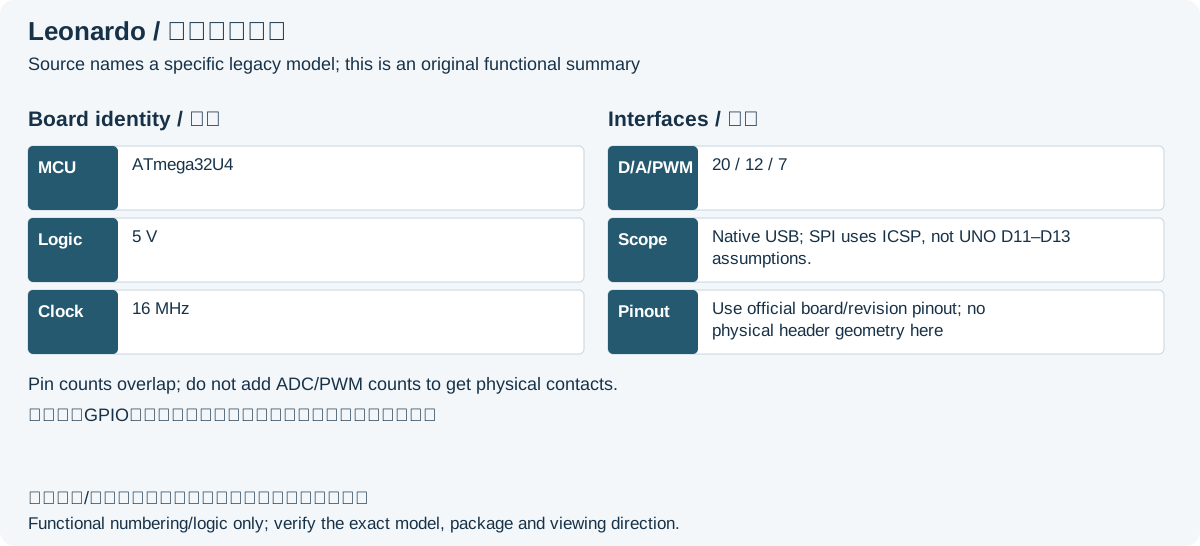
| Leonardo | ATmega32U4 | 5 V | 20 / 12 / 7 | 16 MHz |
| Yún (original) | ATmega32U4 + AR9331 | 5 V AVR / 3.3 V Linux | 20 / 12 / 7 | 16 MHz AVR |
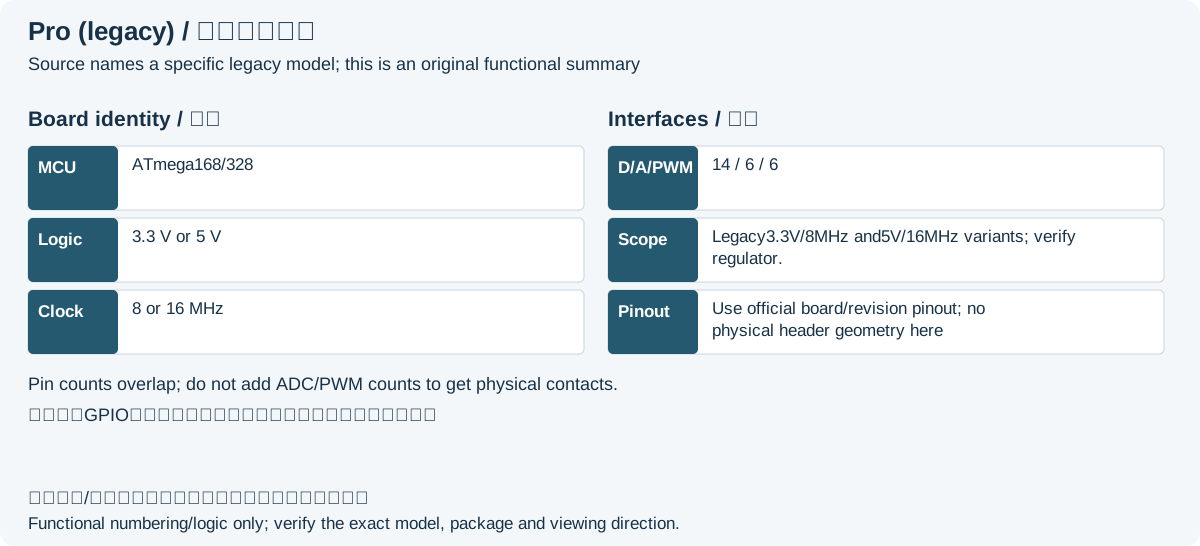
| Pro (legacy) | ATmega168/328 | 3.3 V or 5 V | 14 / 6 / 6 | 8 or 16 MHz |
| Pro Mini (legacy) | ATmega168/328 | 3.3 V or 5 V | 14 / 6 / 6 | 8 or 16 MHz |
| MKR 1000 WiFi | SAMD21 + WINC1500 | 3.3 V | D0–D14 + A0–A6 aliases; see pinout | 48 MHz |
Reference diagrams and checked notes
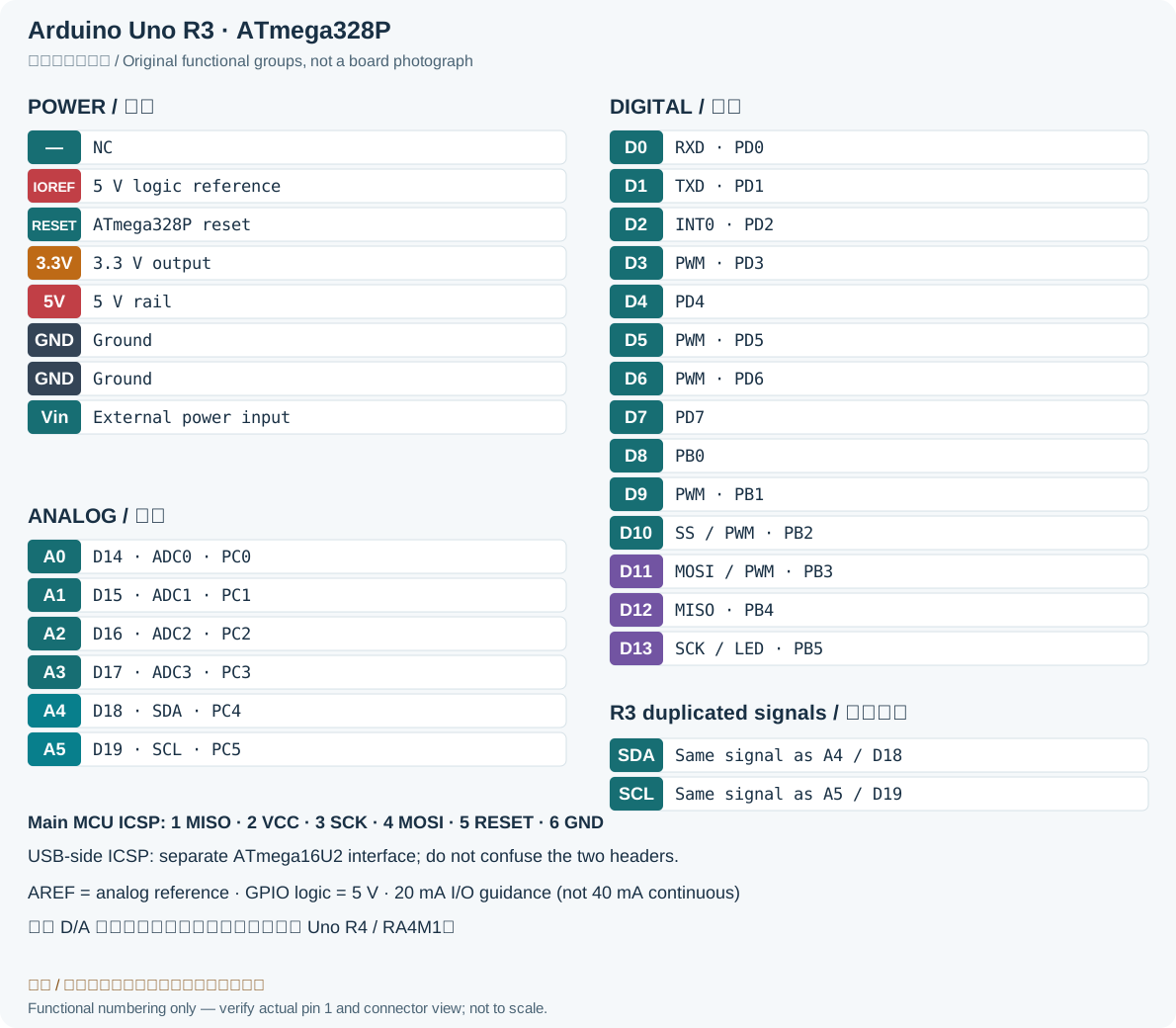
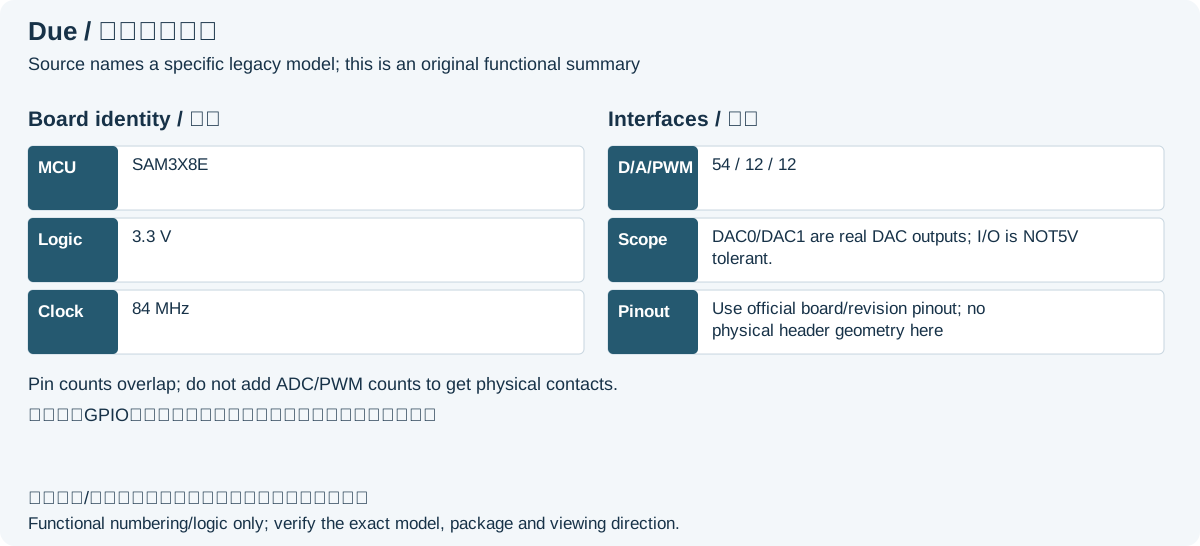
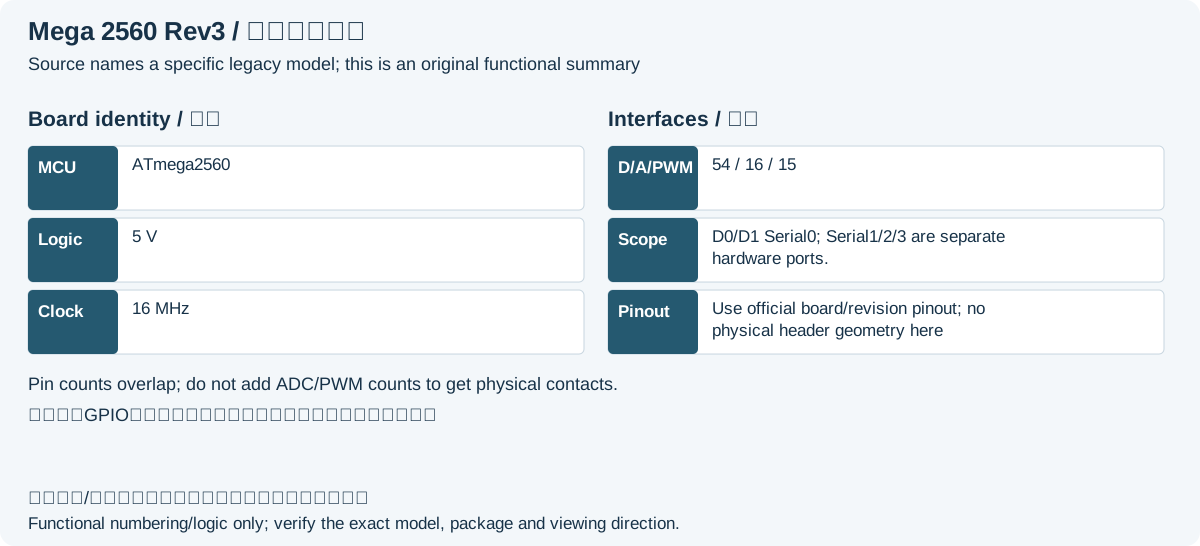
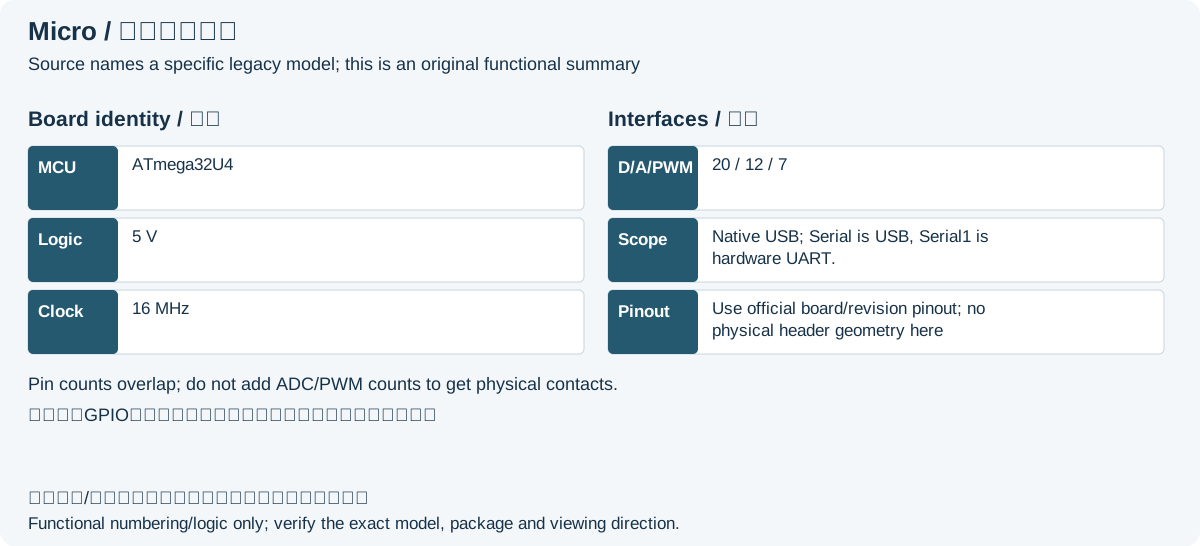
Legacy source notes and applicability
These notes retain the legacy record. For corrected facts and applicability, use this page’s quick answer, scope and visible table corrections.
Arduino DUE
Arduino Mega
Arduino Micro
Arduino Nano
Arduino Leonardo
Arduino Yun
Arduino Pro
Arduino Pro Mini
Arduino MKR1000
Frequently asked questions
Do all Nano boards match Classic Nano?
No. Successors can use3.3 V and different MCUs/peripherals; shape alone does not establish electrical compatibility.
Are RAW and VCC interchangeable on Pro Mini?
No. RAW follows the regulator path; VCC needs a regulated supply matching the3.3 V/5 V version. Check the exact board’s input limits.
Related tools and references
Sources and verification
- Arduino: UNO R3 documentation
- Arduino: Due documentation
- Arduino: Mega 2560 Rev3 documentation
- Arduino: Micro documentation
- Arduino: Classic Nano documentation
- Arduino: Leonardo documentation
- Arduino: Yún (original) documentation
- Arduino: Pro (legacy) documentation
- Arduino: Pro Mini (legacy) documentation
- Arduino: MKR 1000 WiFi documentation
Legacy baseline: the Electrodoc Pro 5.2 data package. Raw records are retained and checked factual corrections are shown explicitly.